

HISTORY CHAPTER 2
Norwegian
settlement
silver the color of salmon

Fishermen and laborers by the score flocked to Petersburg from far-flung shores to make their fortune in silver — the color of salmon. Among them, Norwegian immigrants arrived in numbers large enough to shape the town’s character permanently. They recognized in these waters the same cold, fish-rich seas they had known at home, and they brought with them the skills, the boats, and the stubborn industry to harvest them.

The town that grew from this influx carried the marks of its founders. The word “Fisk” — Norwegian for fish — became part of the community’s identity. The Little Norway Festival, still celebrated today, keeps that heritage alive each May with traditional costumes, food, and the kind of community spirit that built the town in the first place.


That spirit is written into the landscape in ways most people walk past without noticing. The streets of Petersburg carry the names of the fishing vessels that brought these settlers here — a living map of the town’s origins hiding in plain sight.


They came from far-flung shores to make their fortune in silver — the color of salmon.
PETER BUSHMANN
petersburg's namesake
Norwegian immigrant who founded Petersburg, Alaska in 1897
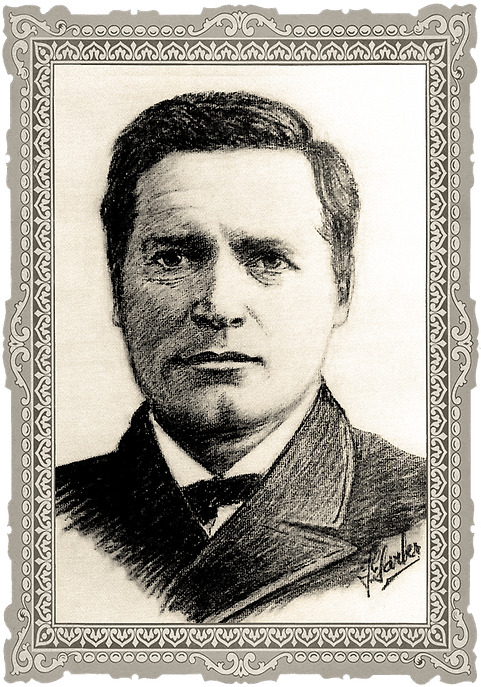
Peter Buschmann
Archival Drawing of Peter Buschmann
Courtesy Clausen Museum
Petersburg wasn’t chosen by accident. Peter Buschmann arrived in the late 1890s and recognized what the location offered: proximity to LeConte Glacier — the southernmost tidewater glacier in the Northern Hemisphere — meant a steady supply of natural ice, accessible by boat. That ice made it possible to pack fish and keep them fresh long enough to ship south. The glacier came first. The cannery followed.

Icy Strait Packing Company
Courtesy Clausen Museum
He named it the Icy Strait Packing Company — a name that said everything about what he was really selling. By 1900 he had built not just a cannery but a sawmill and a dock alongside it, three operations that only made sense together: the sawmill supplied the lumber for building and the crating for shipping, the dock moved the product, and the cannery processed what the boats brought in. Petersburg was officially incorporated as a town in 1910. By 1920, 600 people called Petersburg home year-round.
Ice From LeConte
LeConte Glacier is the reason Petersburg is here. Its icebergs drifted down to town, packed the first fish and grounded on the beaches, and every so often somebody climbed one for a photo. (Not recommended.)


